Modern Firesteel
Modern firesteels — those black sticks from which sparks fly after a brisk scrape with a sharp edge, hot enough to set tinder alight.
Ferrocerium or magnesium flint. How does flint actually work? What is the difference between a conventional flint, a magnesium flint or a ferrocerium flint? How hot is the spark? Can a flint ignite something?
Ferrocerium or magnesium firesteel. How does a firesteel actually work? What is the difference between a traditional flint, a magnesium firesteel and a ferrocerium rod? How hot is the spark? Can a firesteel actually ignite something?
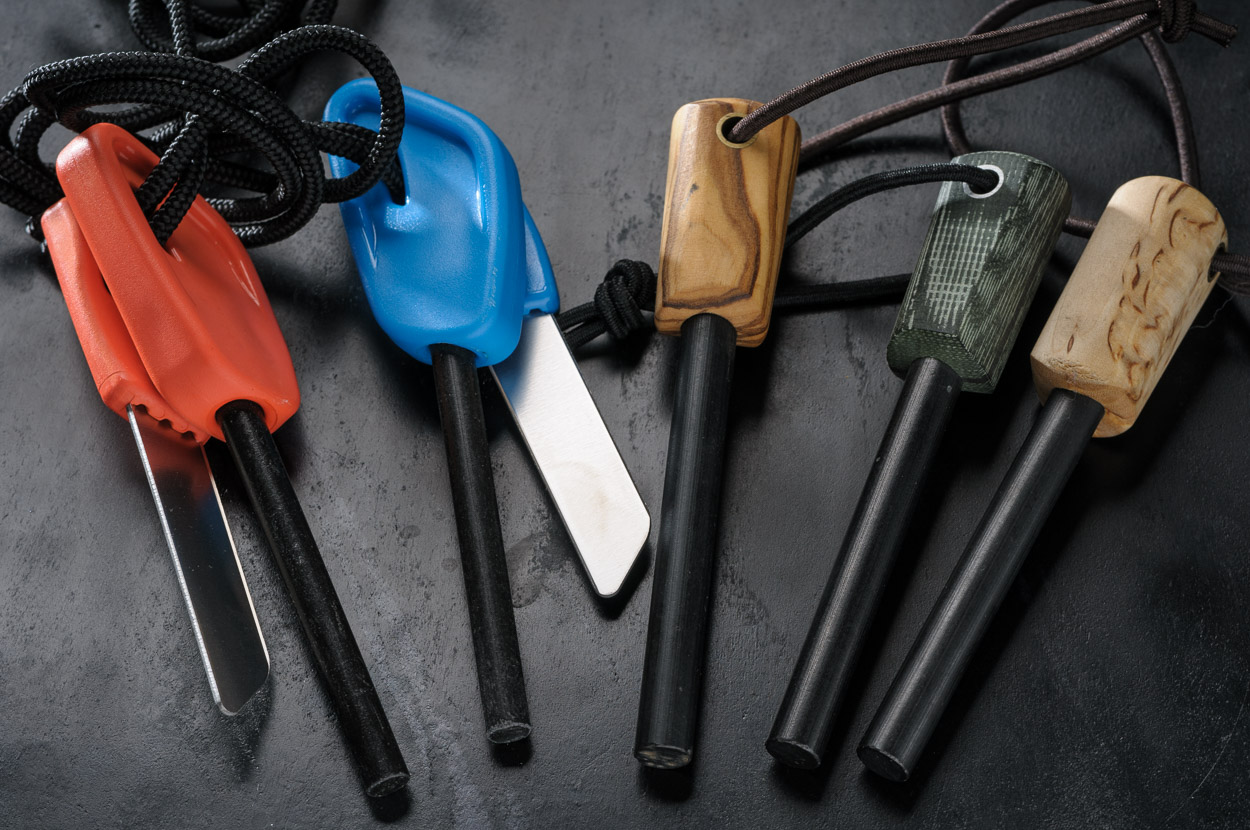
Ferrocerium or Magnesium Firesteel
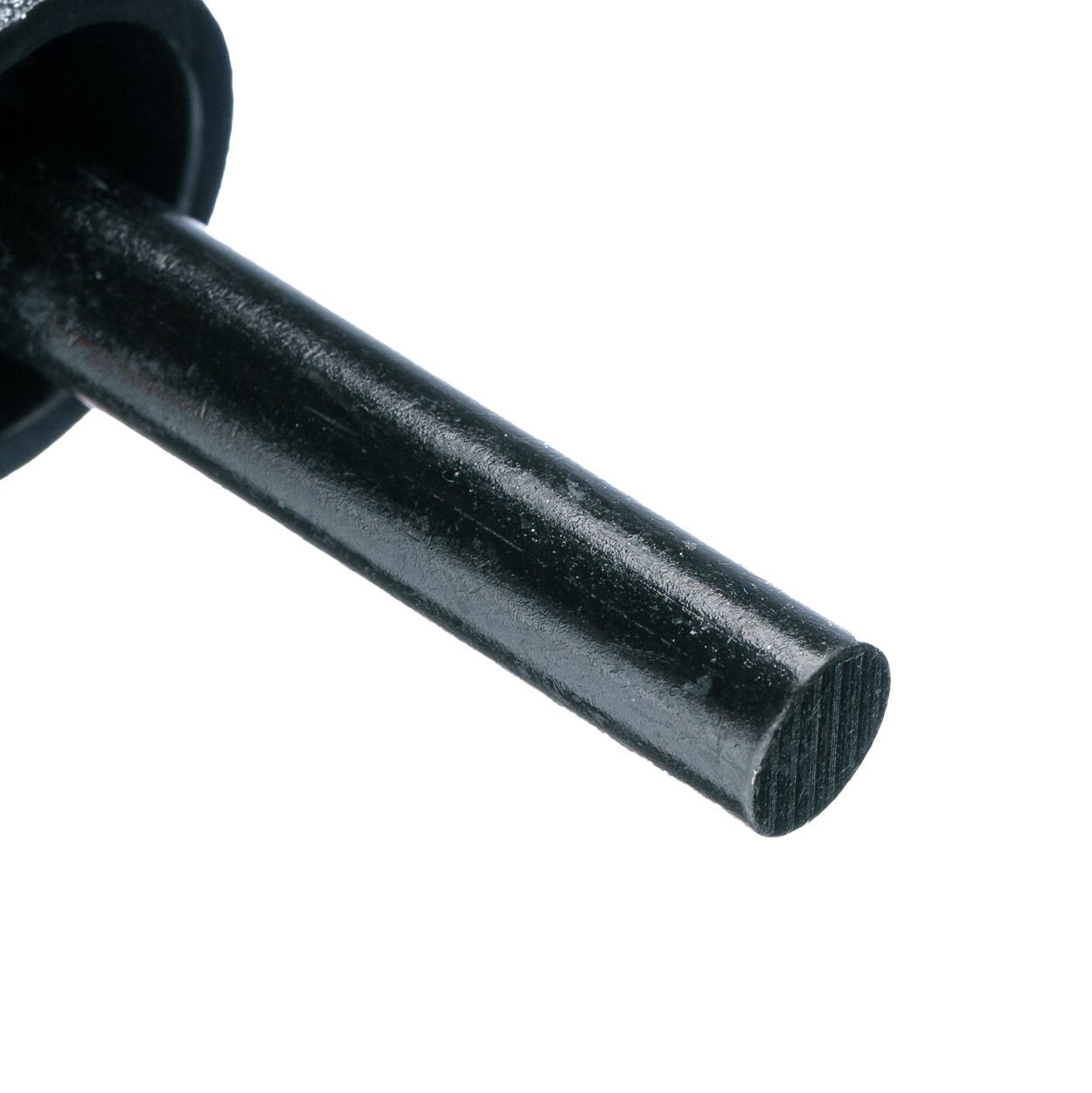
Ferrocerium firesteel
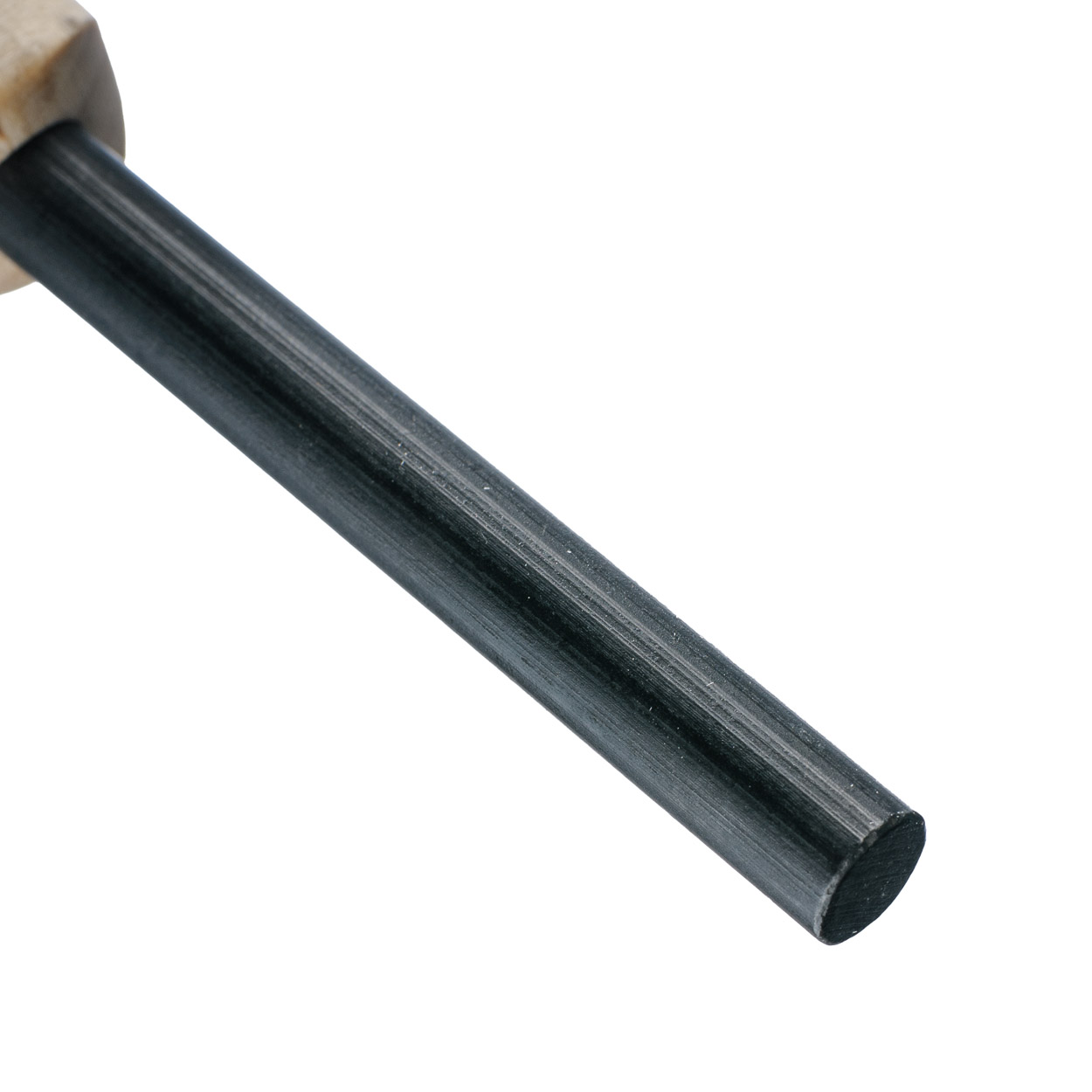
Magnesium firesteel
Modern Flint: How Magnesium and Ferrocerium Firesteels Work Modern flints are like black sticks, from which sparks fly after a brisk scrape with a sharp edge, hot enough to set tinder on fire. Ferrocerium or magnesium flint. How does flint actually work? What is the difference between a conventional flint, a magnesium flint or a ferrocerium flint? How hot is the spark? Can a flint ignite something?
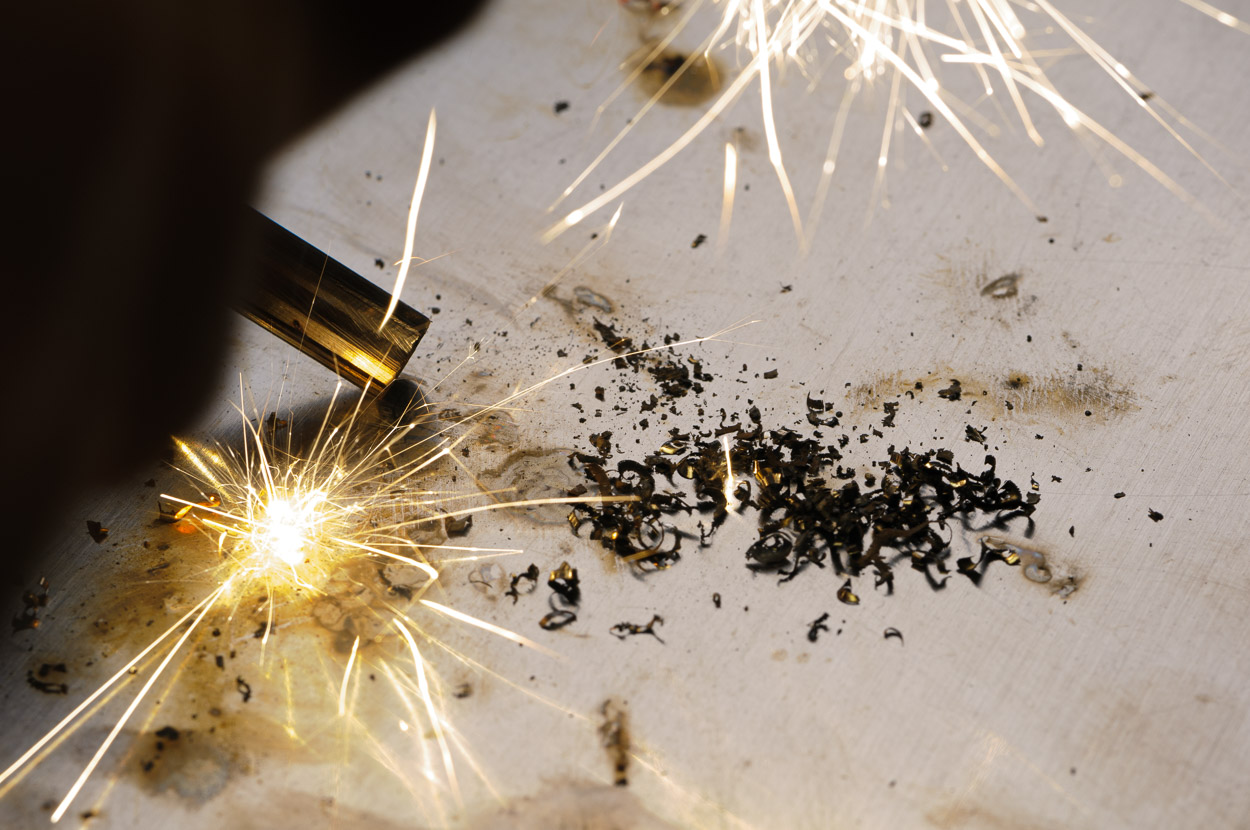
Ferrocerium (also known in Europe as Auermetall) is a synthetic pyrophoric alloy of mischmetal — cerium, lanthanum, neodymium, other trace lanthanoids and certain types of iron (approximately 95% lanthanoids and 5% iron) reinforced with iron and/or magnesium oxides. When struck against a harder material, friction produces white-hot fragments which, upon contact with atmospheric oxygen, rapidly oxidise and create very hot sparks that can reach temperatures of up to 3,315 °C (6,000 °F).
The ferrocerium alloy was invented in 1903 by Austrian chemist Carl Auer von Welsbach. Its name is derived from its two principal components: iron (from the Latin ferrum) and cerium, the most abundant lanthanoid in the mixture. Apart from additional iron and magnesium oxides added for hardening, it is approximately the combination that naturally occurs in the gangue from thorium mining that Auer von Welsbach was studying.
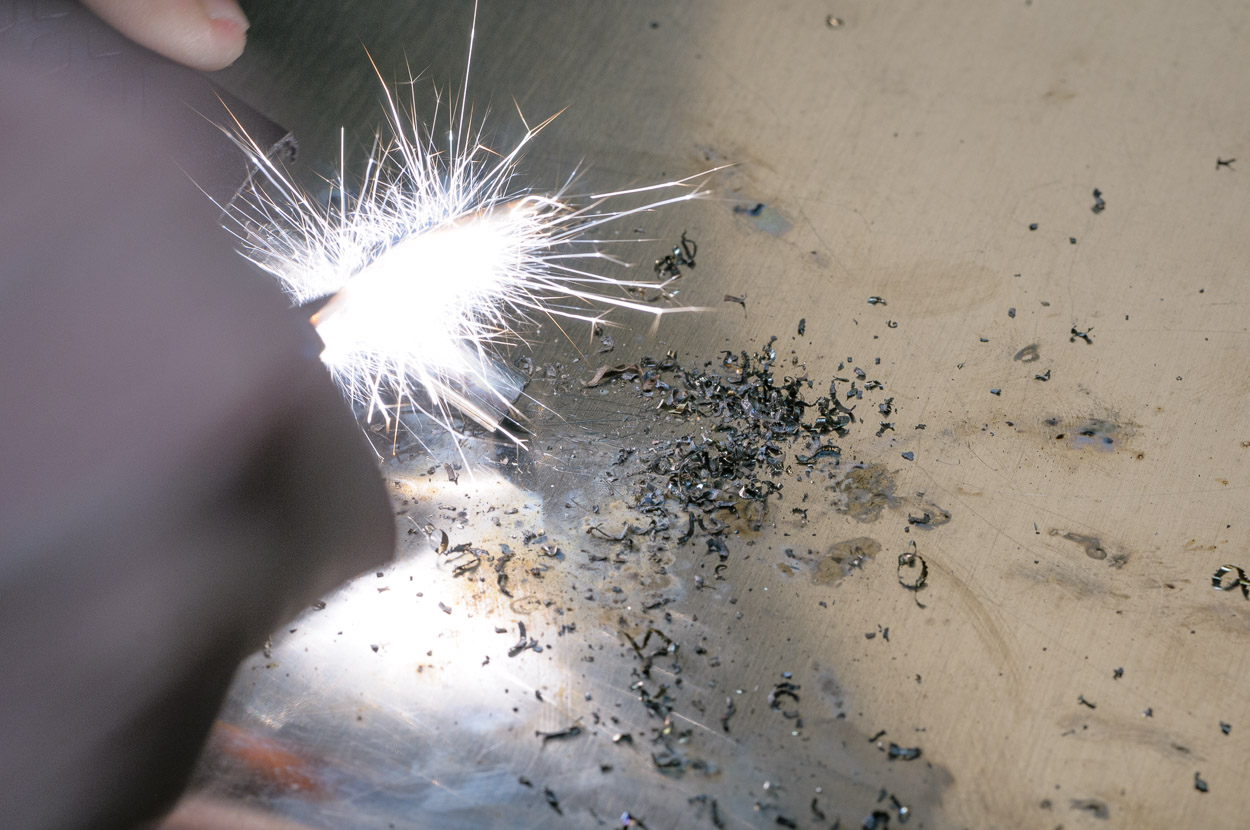
This effect is caused by the low ignition temperature of cerium, which ranges between 150 and 180 °C (302–356 °F). Cerium is the most abundant lanthanoid in the Earth's crust — found at a concentration of approximately 46–60 mg/kg. In seawater its concentration is around 0.0004 mg/l. In the universe, there is one atom of cerium for every 30 billion atoms of hydrogen.
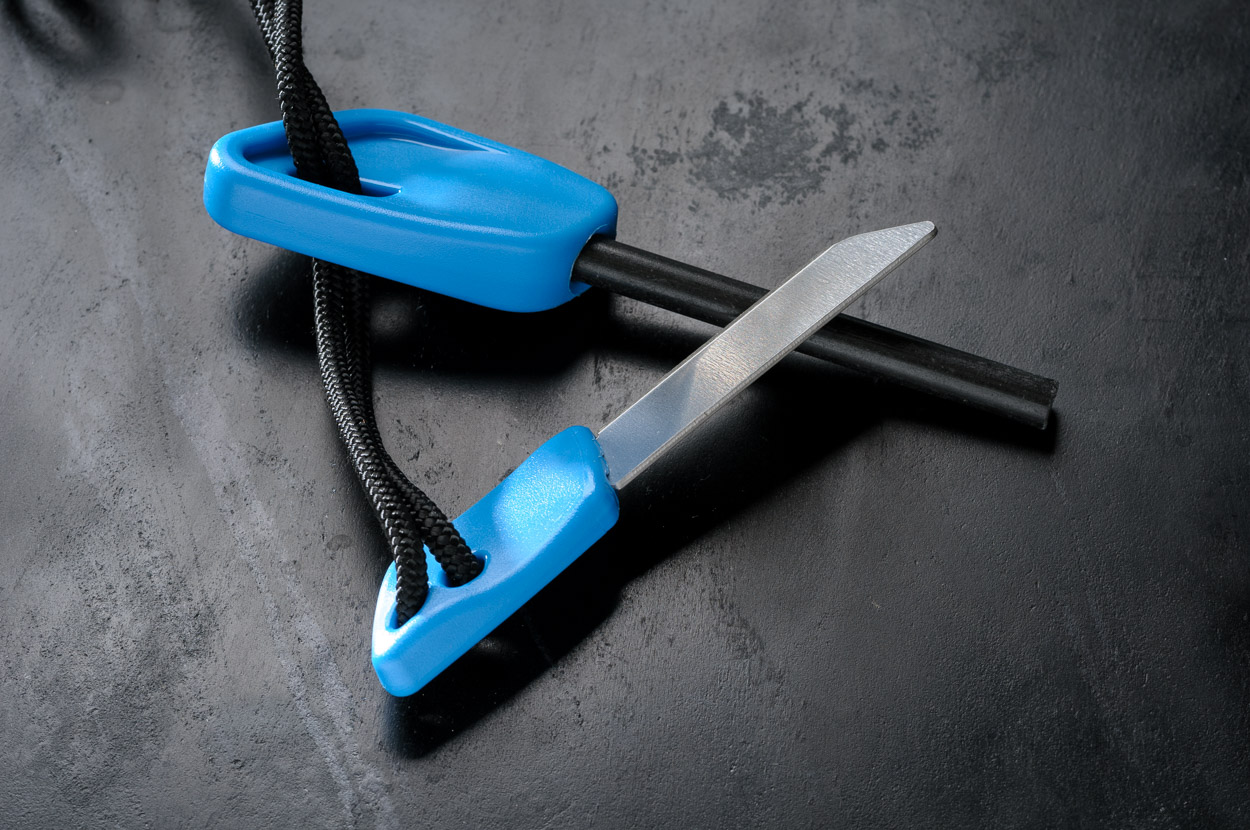
Ferrocerium has many commercial applications, including as an ignition source for lighters, strikers for gas welding and cutting torches, deoxidation in metallurgy, and ferrocerium rods. Due to its ability to ignite under adverse conditions, ferrocerium rods (also called ferro rods, spark rods, and flint strikers) are commonly used as emergency fire-starters in survival kits — in this context, ferrocerium is referred to as "flint" since both are used for fire-starting. However, ferrocerium and natural flint have opposite mechanical roles.
Ferrocerium is used for fire starting in conjunction with a striker, similar to natural flint and steel — except that ferrocerium plays the opposite role to the traditional system. Instead of a natural flint striking tiny iron particles from a fire steel, the striker (which can take the form of a hardened steel wheel) strikes particles of ferrocerium from the "flint". This manual friction produces a spark due to the low ignition temperature of cerium between 150–180 °C (302–356 °F). Any material harder than the rod itself can produce sparks. Although the striker must have a sharp corner, edge or serrated surface to produce sparks, carbon steel is no longer necessary as with old-style flints.
Spontaneous Ignition Temperatures of Common Tinder
| Substance | Ignition Temperature |
|---|---|
| Charcoal | 349 °C (660 °F) |
| Cotton fibres | 455 °C (851 °F) |
| Leather parchment | 200–212 °C (392–414 °F) |
| Magnesium | 473 °C (883 °F) |
| Paper | 218–246 °C (424–475 °F) |
| Peat | 227 °C (441 °F) |
| Kerosene | 400 °C (752 °F) |
| Wood | 300–482 °C (572–900 °F) |
| Ferrocerium spark | up to 3,315 °C (6,000 °F) |
Ferrocerium is used for fire starting in conjunction with a striker, similar to natural flint and steel — except that the striker (which can take the form of a hardened steel wheel) strikes particles from the ferrocerium rod rather than the other way around. Any material harder than the rod itself can produce sparks.
Historical Use of Flint and Steel

Flint and steel used in Dalarna, Sweden in 1916.
Historically, fire was struck using a piece of high-carbon hardened steel — carbon steel is essential; stainless steel will not produce this effect — and a piece of vitreous stone such as quartz, jasper or agate. When the stone was struck against the steel flint, small chips were knocked off that were hot enough to ignite tinder.
Similarly, two pieces of iron-rich pyrite or marcasite struck against each other can also produce sparks capable of igniting tinder.
Flint and quartz used in Dalarna, Sweden in 1916.
Videos: Guides and Reviews
How to flatten a sharpening stone
Soak the lapping stone in water for about 5 minutes, and the stone to be flattened likewise. Under constant moisture, rub the lapping stone across the uneven stone in full strokes until level. Mark the surface with a pencil in several places — when all the pencil marks disappear across the entire surface, the stone is flat.
Quick video guide and introduction to the KMFS symmetric sharpening kit
Basic setup and demonstration of the KMFS Rival sharpening kit, which maintains a precisely set angle throughout the sharpening process. The knife is razor-sharp afterwards.
Review: Kanetsune KC-462 vs KC-147 vs European forged knife
An extremely light and sharp knife from Kanetsune in Blue Steel 2. In the video I compare it with the smaller KC-147 sibling and with a European forged knife. Towards the end, I demonstrate how easily the edge can be restored on a leather strop with abrasive paste.
Support the Project
If you would like to support my work or contribute to the hosting costs of this site, simply scan the QR code in your online banking and contribute any amount. It is greatly appreciated. Contributors of more than 100 EUR/USD will be thanked on this page.
Have a great day, Ondřej